
What Is the Typical Thickness Tolerance for Batteries?
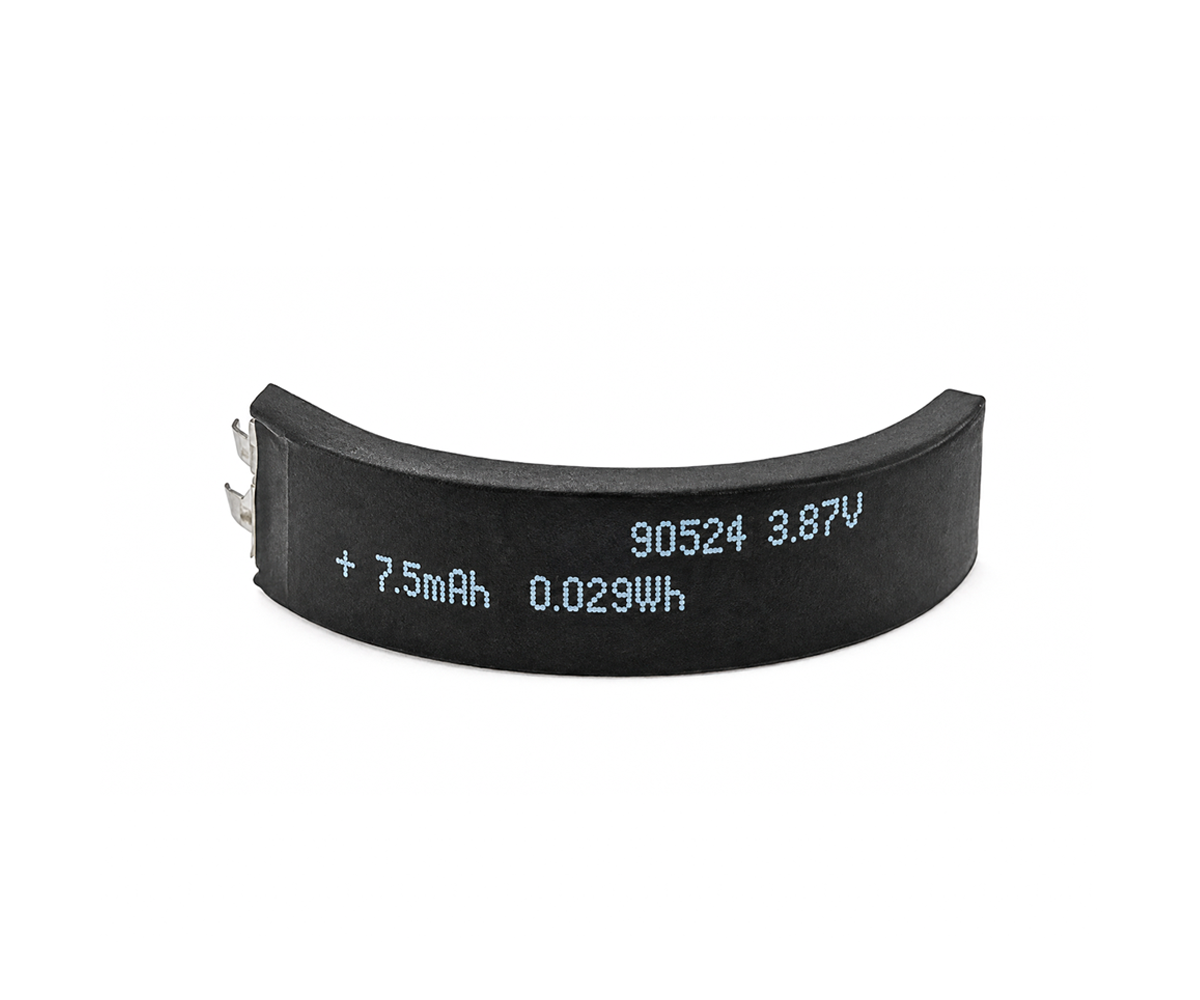
For custom polymer lithium batteries, thickness tolerance describes how much the finished cell may deviate from the nominal design thickness. It is affected by lamination precision, separator thickness, packaging film and compaction control during pouch forming. In practice, tolerance usually tightens as the target thickness decreases, because even a few tenths of a millimeter become significant inside a slim wearable device.
Why Thickness Tolerance Matters
A consistent thickness keeps the cell from jamming in a tight enclosure and protects connectors and foils from mechanical stress. Poor control can cause fit-up problems, uneven pressure on the device, or reduced capacity within the same space budget.
What Affects the Achievable Tolerance
The achievable tolerance depends on cell format, overall size, capacity and the lamination or winding process. Thicker, larger cells generally allow a broader tolerance band, while ultra-thin cells require tighter control and more frequent inspection. Exact values are confirmed per project after design review and first-article samples, subject to project evaluation rather than a single universal number.
Designers should specify the required thickness, total tolerance band and any assembly clearance constraints early, so the supplier can confirm feasibility before tooling begins.