

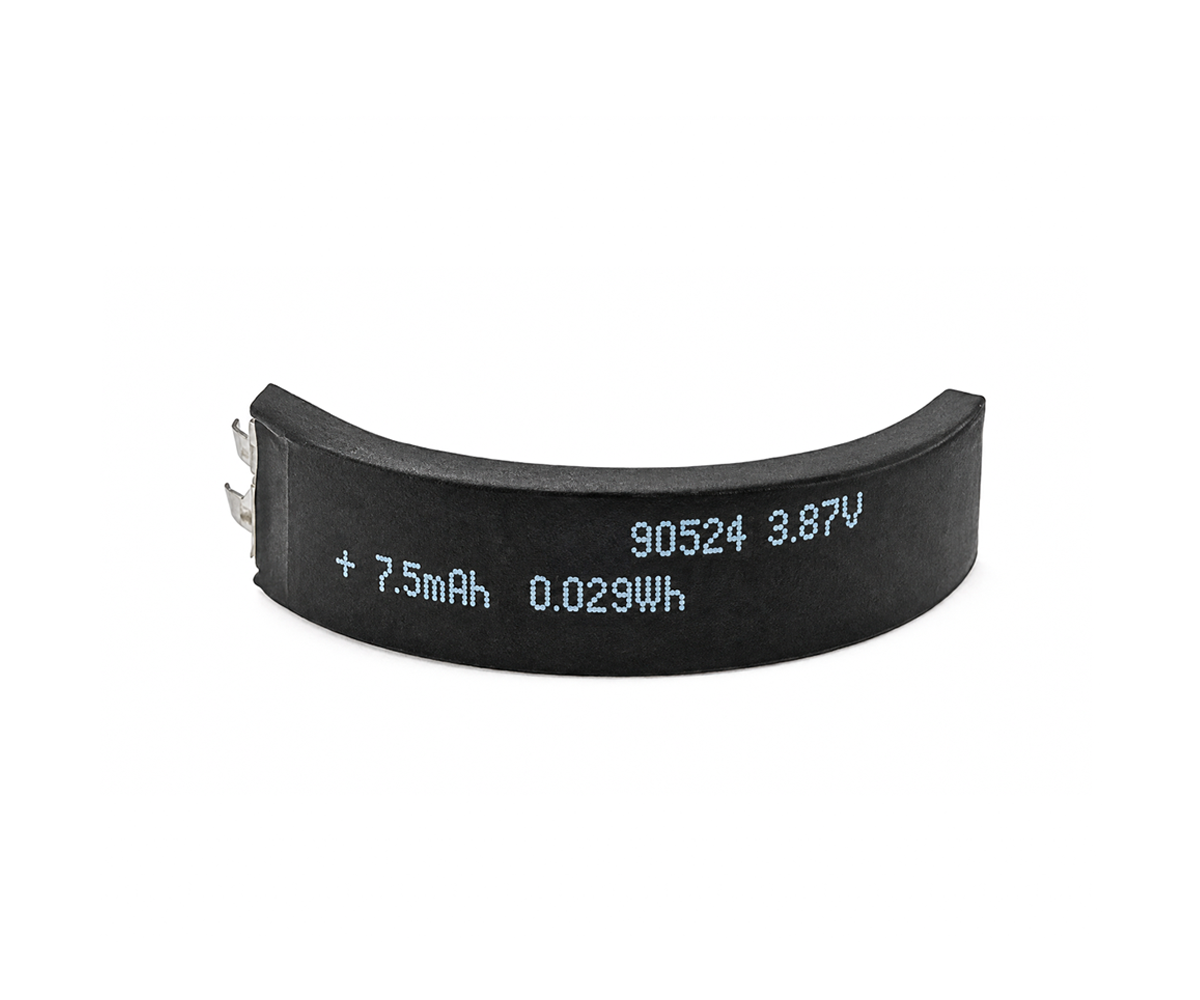
Wearables ask a lot from a battery: it must disappear beneath a slim band, survive sweat and motion, and still last a full day. That tension shapes almost every design decision across the category.
Slimmer, but Not Weaker
Product designers want devices thinner and lighter, which forces cells into ultra-thin and even curved forms. Lithium polymer technology is well suited here because it can be shaped to fill awkward internal spaces rather than leaving dead volume around a rectangular block, and it can bend with the device rather than fighting the industrial design.
Energy Density Versus Comfort
Users expect more sensors, brighter displays and always-on connectivity without more charging. Suppliers respond with higher-voltage chemistries, optimized packaging and carefully controlled swelling so thin cells stay flat and safe against the skin, even after hundreds of charge cycles.
The Road Ahead
As wearables expand into health monitoring and lightweight audio, the battery is increasingly a custom-fit component. The winners will combine slim geometry, reliable safety and dependable day-long endurance in one small package, tuned precisely to each product's internal layout and thermal budget.