

Polymer pouch batteries remain the default choice when a device must be thin, light and shaped to fit.
Why soft-pack fits slim devices
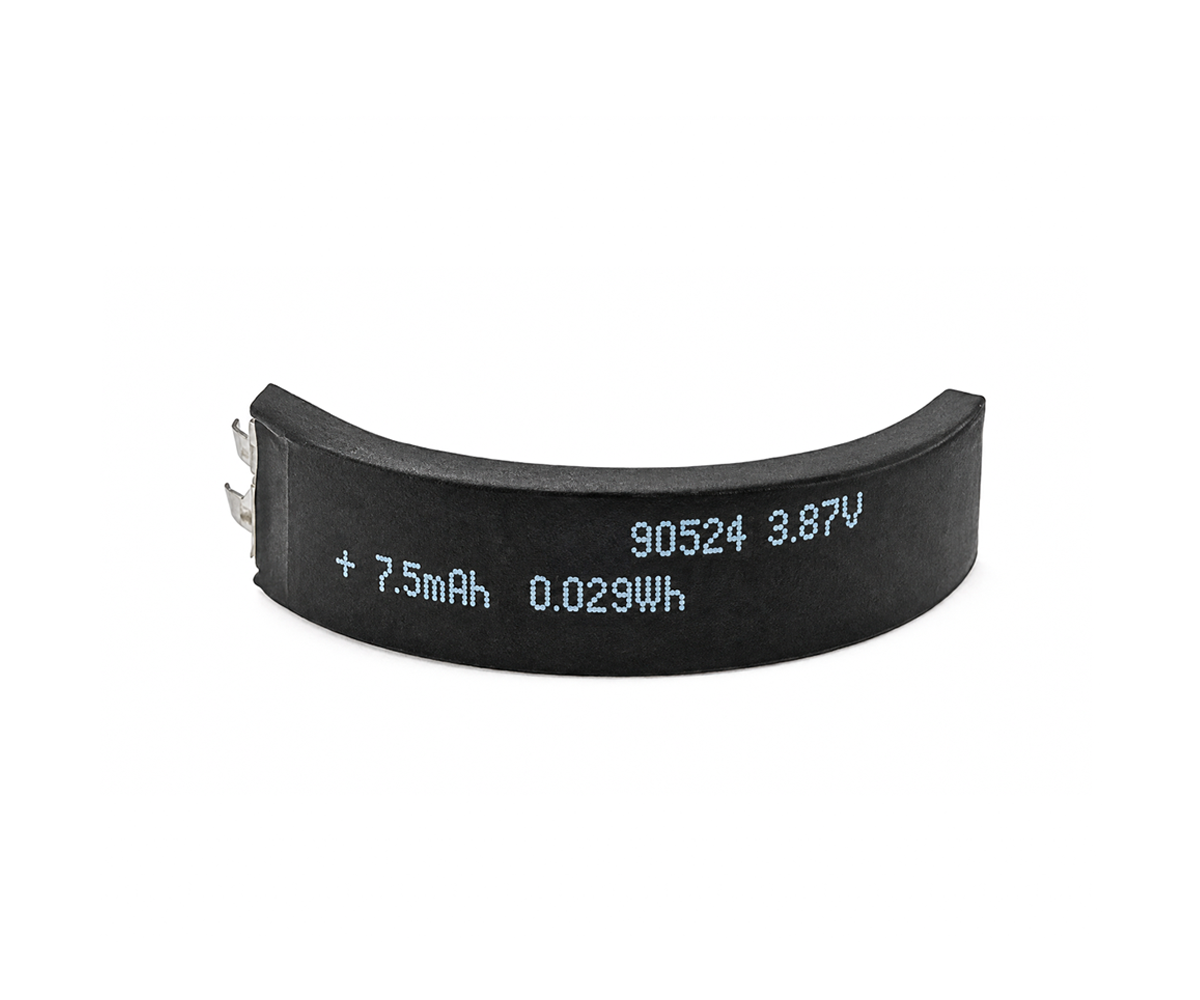
Polymer cells use a soft aluminum-laminated film rather than a rigid metal can. This lets makers produce very thin profiles and curved or irregular shapes that follow the design of earphones, smartwatches, wearable sensors and ultra-slim gadgets. Without the constraint of a hard cylindrical or prismatic shell, the battery can occupy otherwise wasted space inside a product.
Design trade-offs
The same soft packaging that enables thinness also requires careful swelling and pressure management, especially as energy density rises. Vendors design the pouch, enclosure and bonding together rather than treating the cell as a drop-in cylinder. This is why custom-shaped polymer packs are often engineered together with the device housing.
Outlook
As wearables, hearables and small smart devices get slimmer and more ergonomic, polymer pouch cells are likely to remain the synonym for slim applications. Their ability to be customized by thickness, shape and voltage keeps them relevant even as other chemistries evolve. Designers increasingly specify the battery early, together with the industrial design, so the cell becomes an integral part of the product rather than a last-minute fit.